We certify your trainers
CPI Instructors train select staff to become your organization’s Certified Instructors.


CPI is the world’s leading provider of evidence-based de-escalation training. Whether you are choosing your first program or adding to existing training, every CPI program is built around the roles your staff hold and the risks they face.

Crisis Prevention Institute (CPI) is the world’s leading provider of evidence-based de-escalation training. CPI programs equip staff with crisis intervention and de-escalation skills that reduce challenging behavior and help prevent future incidents. Over 17 million individuals are trained in CPI's de-escalation techniques and are making measurable impacts on the safety of their workplaces.
Many organizations begin with Nonviolent Crisis Intervention®, then add advanced physical skills or a specialty topic as their roles and risks require. If you are not sure which fits, tell us about your organization and we can help you choose.
Schedule a ConsultationCPI's additional program offerings provide specialized, proactive strategies for the specific organizations they serve. These programs are considered stand-alone courses that build on our core crisis prevention curriculum.
Add Specialty Topics
Add a CPI specialty topic to our foundational Verbal Intervention, Nonviolent Crisis Intervention, or NCI With Advanced Physical Skills Training programs to customize your skills and techniques by staff roles and the individuals you serve.

When your staff complete a CPI training program, they become Certified Instructors (CIs), authorized to train the program within your organization. The CPI Blue Card® is the credential a CI then issues to their colleagues, once those colleagues have completed training and demonstrated the required de-escalation skills. The Blue Card applies to CPI’s core programs, including Verbal Intervention®, Nonviolent Crisis Intervention®, Nonviolent Crisis Intervention® With Intermediate Physical Skills, and Nonviolent Crisis Intervention® With Advanced Physical Skills.
Our train-the-trainer framework increases fidelity and adoption and ensures the most relevant training is delivered based on roles and risk levels.
CPI Instructors train select staff to become your organization’s Certified Instructors.
Certified Instructors conduct ongoing trainings using CPI courses and materials.
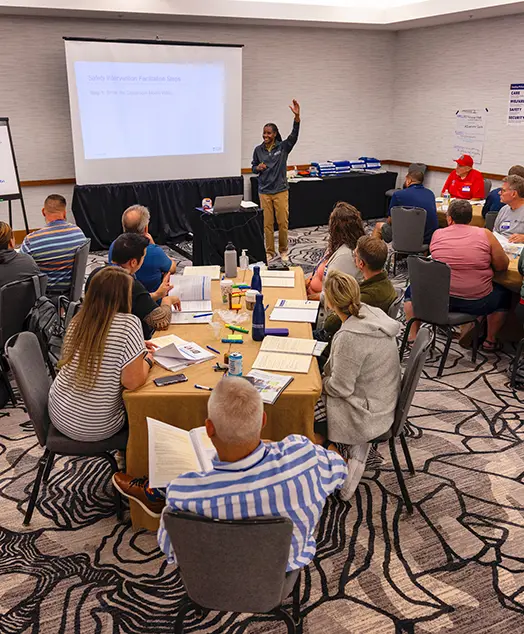
Trained staff gain practical expertise and vocabulary to safely address challenging situations.

Certified Instructors must attend a renewal training every two years to maintain their certification. Our renewal process sharpens your confidence and skills, through refreshed scenarios and networking with your peers to learn from their unique experiences.
Renew NowCPI training distinguishes itself in several ways:
Evidence-Based Foundation and Scale
CPI® has trained over 17 million individuals worldwide, establishing it as the global leader in de-escalation training. This extensive reach reflects the program's proven effectiveness and broad acceptance across industries. CPI's evidence-based methodology ensures that training techniques are grounded in scientific research and continuously refined based on measurable outcomes.
Comprehensive Program Portfolio
Unlike many programs that focus on single approaches, CPI offers a complete range of training solutions customized for specific workplace environments and risk levels. This includes specialized programs for education, healthcare, human services, and other industries, ensuring that staff receive training tailored to their unique challenges and regulatory requirements.
Measurable Impact
CPI training delivers demonstrable results, as evidenced by customer success stories showing significant reductions in safety incidents. For example, organizations have reported up to 85% reductions in emergency safety interventions after implementing CPI training. These quantifiable outcomes underscore the practical effectiveness of CPI's approach.
Industry Leadership and Innovation
Since 1980, CPI has maintained its position as the industry standard for safety and security training. The organization's commitment to staying current with the latest research and trends ensures that training programs evolve with emerging best practices and regulatory changes.
Holistic Crisis Prevention Philosophy
CPI's approach emphasizes prevention rather than just reaction, focusing on building skills that help staff recognize early warning signs and intervene before situations escalate to crisis points. This proactive methodology helps create safer environments while supporting the dignity and well-being of all individuals involved.
The combination of CPI's extensive experience, evidence-based approach, and proven track record of measurable improvement makes it a comprehensive solution for organizations seeking effective de-escalation training.
The duration of CPI training varies depending on the specific program and training type.
For those seeking to become Certified Instructors, the train-the-trainer component takes 3 hours. This instructor training prepares individuals to conduct ongoing trainings for their colleagues using CPI courses and materials.
For participants taking CPI courses, the Dementia Capable Care program requires 3.5 hours to complete.
For other CPI programs, training times are tailored to each program's content and objectives.
Yes, CPI training is evidence-based. The Crisis Prevention Institute is the world's leading provider of evidence-based de-escalation training.
CPI programs are built on scientific foundations and deliver measurable results across diverse organizations. Over 17 million individuals have been trained in CPI's evidence-based de-escalation techniques, creating demonstrable impacts on workplace safety. Organizations consistently report quantifiable improvements, including reduced staff injuries, decreased use of force, fewer classroom disruptions, reduced misconduct, and improved staff confidence.
This evidence-based approach ensures that CPI's crisis intervention and de-escalation skills are grounded in research and proven effective at reducing challenging behavior while preventing future incidents.
CPI does not offer free training. CPI operates through a train-the-trainer model where organizations invest in certification programs to develop their own internal training capacity.
The CPI approach involves Certified Instructors who conduct ongoing trainings using CPI courses and materials within their organizations. Additionally, CPI provides live training sessions led by Training and Development Consultants for implementation advice and peer-to-peer strategy sharing, but these are part of paid program offerings rather than free standalone training.
For organizations seeking CPI training, the standard approach requires enrollment in CPI's certification programs, which provide the foundation for building internal training capabilities through qualified Certified Instructors.
CPI's core programs are tiered, so training can match the roles your staff hold and the risks they actually face rather than a single generic course.
Foundational programs
Any of these can be layered with a specialty topic—Trauma, Mental Health, or Autism Spectrum Disorder—to tailor the training to the specific individuals your staff serve.
Beyond the core program pathway, CPI also offers specialized, stand-alone programs built for specific sectors: Reframing Behavior for K–12 classrooms, Dementia Capable Care for health care and senior living staff, and Prevention First Online Training, a short on-demand course for identifying escalating behavior.
Certified Instructors then renew their certification every two years to keep skills and Blue Card® issuance current.
Not sure which level fits your organization? Tell us about your team and we'll help you choose
De-escalation techniques for the workplace focus on managing your response to challenging behavior and using evidence-based strategies to prevent situations from escalating to violence.
Core De-escalation Strategies:
Stay calm and manage your own response - Communicate in an even tone and manner while maintaining your composure. Your ability to remain calm directly influences the outcome of the situation.
Use nonverbal communication effectively - Your body language and positioning play a critical role in de-escalating tense situations.
Practice empathic listening - Listen with genuine understanding to what the person is communicating beyond their words.
Adapt techniques based on behavior level - For nervous or anxious individuals, use acknowledgment and show empathy. For frustrated or confused people, be relatable and give options. When someone is angry, set clear limits.
Set appropriate limits - Establish boundaries while continuing to use verbal de-escalation strategies throughout the interaction.
Maintain safe distance - Keep physical space between yourself and the person in crisis to avoid potential assault.
Know when to seek assistance - Alert other staff for support when needed, and remove yourself from the situation if it escalates further.
Handle challenging questions appropriately - Respond to difficult inquiries in ways that defuse rather than inflame the situation.
These techniques are grounded in Care, Welfare, Safety, and Security℠ principles and are designed to help you respond to difficult workplace behavior in the safest, most effective way possible. CPI offers customized de-escalation training programs tailored to your workplace's unique roles and risk levels.
Both programs teach staff to recognize warning signs and respond to disruptive or hostile behavior. The difference is whether physical intervention skills are included.
Verbal Intervention™ Training is built for organizations with a hands-off policy. It covers verbal, nonverbal, and communication strategies staff can use to de-escalate a situation, with no physical technique involved.
Nonviolent Crisis Intervention® includes everything in Verbal Intervention, plus safe physical intervention skills—safe disengagements and restrictive interventions staff can use if a situation does escalate to physical risk. It's CPI's most widely adopted program because it prepares staff for the full range of everyday crisis situations, not just the verbal stage.
Which one fits your organization comes down to policy and risk, not budget:
Organizations supporting individuals who display dangerous or complex behavior often add Nonviolent Crisis Intervention® With Intermediate or Advanced Physical Skills on top of NCI.
Still not sure? Tell us about your organization and we'll help you find the right starting point.
Limit setting is a powerful de-escalation technique used to help steer situations back on track and guide individuals toward making positive choices when they're experiencing anxious, hostile, or challenging behavior.
The key distinction in effective limit setting is understanding the difference between setting a limit and issuing an ultimatum. When done properly, limits make the person feel respected and supported rather than threatened or cornered.
There are four essential considerations when setting limits:
Predictable limits serve multiple important functions: they help individuals make sense of their world, provide security, and offer clear guidance for appropriate behavior.
CPI® teaches a comprehensive 5-Step Approach to Setting Limits that incorporates preventive, verbal, and nonverbal strategies. This systematic approach helps professionals handle difficult situations while meeting both their goals and those of the person they're working with.
Effective limit setting is taught across multiple CPI training programs and serves as a foundational skill for crisis prevention and de-escalation. When implemented correctly, it becomes a respectful way to establish boundaries that support positive behavioral choices while maintaining dignity for all involved.
De-escalating an aggressive person at work requires a systematic approach that prioritizes safety while using evidence-based techniques to reduce tension and restore calm.
Immediate Response Strategies
When encountering an aggressive individual, maintain your composure and communicate in an even tone and manner. Stay calm and manage your own response, as how you react is often the key to defusing the situation. Keep a safe distance to avoid being physically assaulted while continuing to engage with the person.
Early Intervention Techniques
Recognize escalation early by watching for noticeable changes or increases in behaviors that signal distress. At the first signs of anxiety or agitation, implement simple interventions such as moving the person to a quiet space, offering comfort items like water or a comfortable chair, and engaging with them in a calm tone and manner.
Progressive De-escalation Approach
As distress increases, take a more active approach using a firm tone when providing clear directions regarding their behaviors. Continue using verbal de-escalation skills and strategies throughout the interaction. Consider precipitating factors—internal or external causes that may have led to the aggressive behavior, such as personal issues or unexpected circumstances—to help you detach from what the person is saying and focus on support.
Safety Protocols
If the situation continues to escalate, remove yourself from the area as quickly as possible and seek assistance from other staff or emergency services. Alert other staff in the area to request support and assistance. Never attempt a hands-on approach with an actively aggressive person unless required by your role and specifically trained to do so.
Essential Skills
Effective de-escalation requires proper training in techniques that focus on Care, Welfare, Safety, and Security℠ for everyone involved in the crisis. Key capabilities include setting limits, handling challenging questions, and preventing physical confrontations.
De-escalation and restraint represent fundamentally different approaches to managing crisis situations, with de-escalation serving as the preferred first-line intervention and restraint reserved only as a last resort.
De-escalation involves verbal and nonverbal techniques used to prevent or reduce the intensity of crisis situations before they escalate further. This approach focuses on recognizing early warning signs of potential crisis situations and employing communication skills to defuse tensions. De-escalation techniques are designed to address situations proactively through supportive interaction and understanding.
Restraint, in contrast, involves physical interventions used to limit a person's freedom of movement when they pose an imminent danger to themselves or others. Physical restraints should only be implemented when the person presents an immediate threat of harm and all nonphysical options have been exhausted.
The key distinction lies in timing and approach: de-escalation is primarily preventive and communication-based, while restraint is reactive and physical. The least restrictive form of intervention should always be considered and utilized first, prior to the use of any physical restraint. This means attempting de-escalation techniques before considering any physical intervention.
Restraint should only be used as a last resort when the person's behavior creates imminent danger to self or others, and the danger of the behavior outweighs the risks associated with using restraint. Any episode of restraint should be ended at the earliest possible moment when the person is no longer an imminent danger.
Both approaches require proper training, with restraint use necessitating ongoing, competency-based training that includes identifying signs of distress that might indicate the need to immediately end the intervention.