Nonviolent Crisis Intervention® Training
De-escalation techniques for organizations experiencing medium to high-risk behavior.
Training That Applies Interventions at Different Crisis Levels
Nonviolent Crisis Intervention (NCI) Training prepares your staff to prevent and de-escalate medium to high-risk behavior using both restrictive and non-restrictive methods. Instructor Certification Programs for NCI are delivered in an online and in-person format.



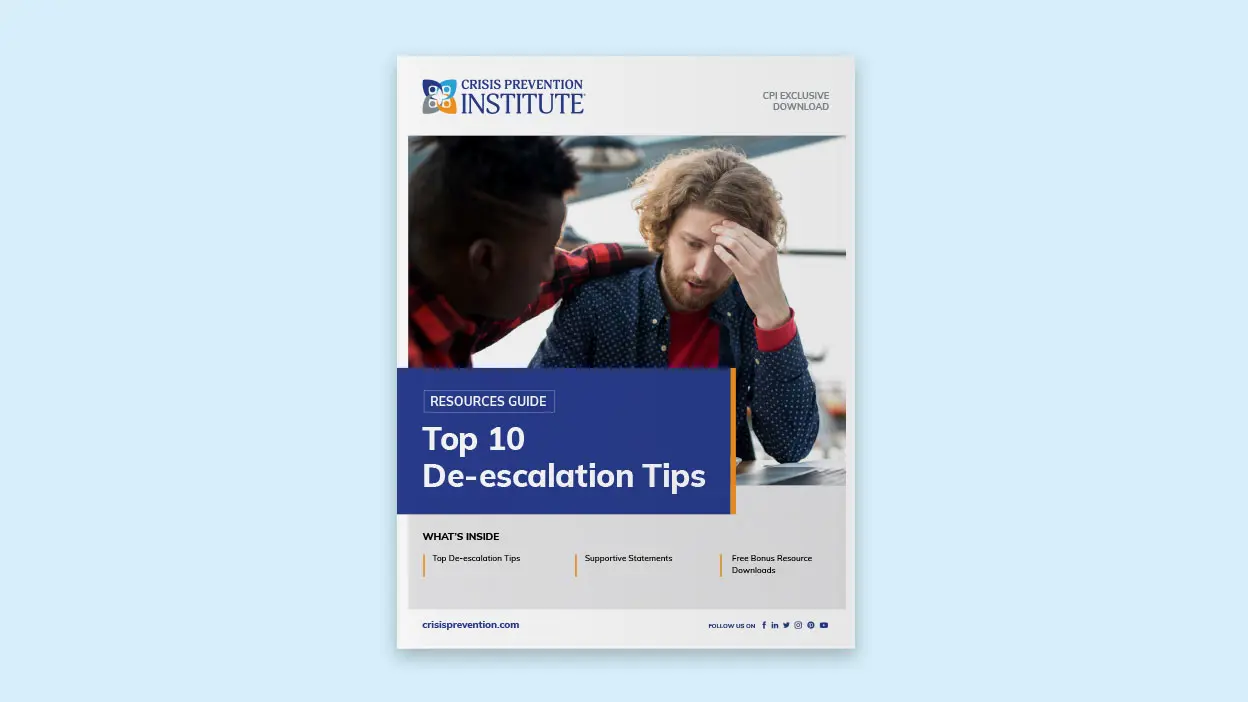
Top 10 De-escalation Tips
Based on strategies taught in CPI Nonviolent Crisis Intervention® training, these tips will help you respond to difficult behavior in the safest, most effective way possible.
Crisis Prevention Statistics
CPI Training Makes a Sustainable Impact
Our evidence-based crisis prevention programs have measurable impacts on the organizations we serve.
Add Specialty Topics
Enhance Your Nonviolent Crisis Intervention Training
CPI offers specialty topic programs that deepen a trainee's understanding of challenging behavior displayed by unique populations of individuals. These are supplemental to the material presented in our core Nonviolent Crisis Intervention program.
Our Training Approach
Our train-the-trainer framework increases fidelity and adoption and ensures the most relevant training is delivered based on roles and risk levels.
More to Explore
Techniques for All Roles and Risk Levels
Our industry-leading programs provide the skills to recognize, prevent, and respond to crises in the workplace. Our customized training solutions ensure the right staff receive the right level of training for their role and risk level.
Verbal Intervention Training
Instills the confidence and skills to verbally de-escalate disruptive behaviors.
Nonviolent Crisis Intervention Training
Provides the skills to safely disengage and intervene in crisis situations.
NCI With Advanced Physical Skills
Teaches safe and advanced disengagement skills for higher-risk roles.
Frequently Asked Questions About Nonviolent Crisis Intervention
To become CPI certified, you need to attend training conducted by CPI Global Professional Instructors who will train select staff from your organization to become Certified Instructors. This certification process applies to CPI's core training programs, including CPI Verbal Intervention™ Training, Nonviolent Crisis Intervention®, Nonviolent Crisis Intervention® with Intermediate Physical Skills, and Nonviolent Crisis Intervention® With Advanced Physical Skills.
Once certified, you must attend renewal training every two years to maintain your certification. The renewal process ensures you stay current with the most updated de-escalation techniques while sharpening your confidence and skills through refreshed scenarios and networking opportunities with peers.
To begin the certification process or renew an existing certification, you can start at https://www.crisisprevention.com/event-registration.
Nonviolent Crisis Intervention® (NCI™) is CPI's foundational training program that provides staff with evidence-based skills to safely recognize, respond to, and de-escalate everyday crisis situations. The program prepares participants to prevent and de-escalate medium to high-risk behavior using both restrictive and non-restrictive methods.
The training encompasses several core components designed to build confidence and competence in crisis situations. Participants learn a common de-escalation communication framework, proactive verbal de-escalation strategies, and safety intervention and disengagement skills. The program also teaches safe disengagements and restrictive interventions when necessary.
NCI™ training incorporates CPI's proprietary Crisis Development Model℠, which introduces a four-step process for turning crises into opportunities for positive outcomes. Additionally, the program utilizes the Decision-Making Matrix℠, a tool that creates an objective plan for responding to high-risk behavior and reducing the chance of severe outcomes.
The curriculum explores the psychological foundations underlying behavior, including the effects of trauma and brain psychology on both the person in crisis and the responding individual. This comprehensive approach helps staff intervene more safely when behavior becomes dangerous, while building the skills and confidence necessary to handle crises with minimal anxiety and maximum security.
Nonviolent Crisis Intervention® (NCI™) certification is professional training that equips individuals to become Certified Instructors capable of teaching crisis prevention and de-escalation techniques within their organizations.
The certification process involves completing an Instructor Certification Program that provides comprehensive training in evidence-based crisis intervention methods. Upon successful completion, participants earn their certification and can deliver Nonviolent Crisis Intervention® training to staff in their workplace.
CPI offers several NCI™ certification options to meet different organizational needs:
Standard Certification Programs:
- 3rd Edition Instructor Certification Program available in classroom or blended classroom formats
- Certification renewal programs for maintaining current instructor status
Specialty Topic Options:
The program includes optional specialty topics that focus on specific populations or trauma-informed approaches:
- Trauma specialization
- Mental health specialization
- Autism specialization
- ADHD specialization
Advanced Training Levels:
- Nonviolent Crisis Intervention® With Intermediate Physical Skills certification for situations requiring additional intervention techniques
- Nonviolent Crisis Intervention® With Advanced Physical Skills training for more complex, high-risk crisis situations
CPI certification programs are accredited by multiple professional organizations and provide continuing education units (CEUs). This ensures the training meets professional development requirements across various industries including health care, education, and human services.
CPI offers training for schools and teachers through our Nonviolent Crisis Intervention® program. This evidence-based training equips educators with proactive de-escalation strategies to create safer, more positive learning environments.
Our approach involves training select teachers to become Certified Instructors for your school. These Certified Instructors then conduct ongoing trainings with their colleagues using CPI courses and materials. This train-the-trainer model ensures sustainable implementation and skill reinforcement throughout your educational organization.
The training provides teachers with essential tools for safe de-escalation, helping to decrease office referrals while increasing staff morale. School districts that have implemented CPI training report significant improvements including:
- More positive school culture and reduced disciplinary issues
- Decreased classroom disruptions and increased staff confidence
- Reduced fights, assaults, and out-of-school suspensions
- Improved academic achievement and positive peer-to-peer relationships
Our world-renowned Global Professional Instructors deliver engaging, interactive training sessions that prepare educators to begin each school year with effective strategies for managing challenging behaviors.
CPI also offers additional training options such as Reframing Behavior™, De-escalation Basics™, and De-escalation Basics™ for Bus Drivers to support a schoolwide culture of safety.
The CPI Decision-Making Matrix℠ is a powerful assessment tool designed to evaluate behavioral risk factors and guide staff in crisis prevention and response. This evidence-based framework helps personnel determine the appropriate level of intervention based on the level of risk present in a given situation.
The Decision-Making Matrix℠ serves multiple critical functions. It assists staff in making informed decisions about the use of physical restraints when necessary, helping them select from lower-, medium-, and higher-level holding skills to safely manage risk behavior. Additionally, the tool provides risk assessment criteria that enable staff to evaluate perceived threats and determine the most appropriate response to ensure maximum safety for all individuals involved.
This systematic approach transforms potentially dangerous situations into manageable scenarios by giving staff a structured method to assess risk and respond accordingly. The Decision-Making Matrix℠ works alongside CPI's Physical Skills Review to support comprehensive decision-making in crisis situations.
By implementing this tool, organizations can reduce behavioral risk factors while ensuring their staff have the confidence and framework needed to navigate challenging situations safely and effectively.
The Supportive Stance℠ is a fundamental positioning technique used in de-escalation situations to communicate calm, respect, and non-threatening behavior while helping keep both you and the other person safe.
This technique involves specific physical positioning that demonstrates support and non-aggression during crisis situations. The Supportive Stance℠ is designed to help you maintain a safe distance while showing that you are there to help, not to threaten or intimidate.
The concept aligns with CPI's Crisis Development Model℠, which provides guidelines for responding appropriately at different levels of crisis. When someone is expressing anxiety, the model emphasizes the need to support them, and when situations escalate, it recommends taking a step back physically, emotionally, and psychologically while remembering the Supportive Stance℠.
This positioning technique is particularly valuable because it allows you to stay engaged with someone in crisis while maintaining appropriate boundaries. It demonstrates your commitment to helping them work through difficult moments rather than simply walking away, which is essential when working with individuals who may be resistant to help but still need support.
The Supportive Stance℠ works in conjunction with other de-escalation techniques, including verbal communication, empathic listening, and being mindful of nonverbal communication and personal space to establish rapport and provide effective support.
The directive approach in CPI is defined as "taking control of a potentially escalating situation by setting limits."
This approach goes beyond simply giving two choices and explaining consequences. At its core, the directive approach empowers individuals to consider the results of their actions while helping staff determine what to enforce and what not to enforce. When implemented effectively, this approach typically has a calming effect on people experiencing crisis situations.
The directive approach represents one way to take control of a potentially volatile situation through strategic limit-setting rather than reactive measures. By focusing on empowerment and thoughtful enforcement decisions, this evidence-based technique helps create safer environments while supporting individuals through challenging moments.
The CPI debriefing process is grounded in Therapeutic Rapport and the COPING Model℠, which provides a systematic approach for post-incident discussions following workplace violence or crisis situations.
The COPING Model℠ consists of six components:
Control - Ensure everyone involved has regained physical and emotional control before beginning the debrief. Staff requiring medical attention should address those needs first.
Orient - Review the basic facts of what occurred. Focus on what staff observed, heard, or noticed before, during, and after the incident.
Patterns - Identify behavioral patterns in how staff responded to the situation. This includes recognizing both effective response patterns that should be reinforced and problematic patterns that need improvement.
Investigate - Explore alternative approaches and determine if different responses would have been more effective. Consider whether there are better ways to approach similar situations in the future.
Negotiate - Reach agreement on next steps and establish clear expectations to prevent similar incidents. Focus on translating lessons learned into practical safety measures.
Give - Provide constructive feedback and encouragement to build staff confidence and capability for future interventions.
The debriefing process is typically conducted twice: once with the individual involved in the incident and once with the staff members who intervened. This dual approach creates learning opportunities for everyone involved and helps identify behavioral causes that can inform future care planning. The process emphasizes prevention, problem-solving, and continuous improvement rather than simply managing incidents as they occur.