CPI Training for Dementia Care Providers
Person-centered dementia care training that gives staff the language, confidence, and de-escalation skills to support patients through distress behaviors without restraint.
Crisis Prevention Institute has trained more than 17 million professionals since 1980, including the dementia care workforce in memory care communities, skilled nursing facilities, hospices, and home health agencies across the United States.

CPI Courses
Dementia Training Programs
CPI’s online dementia training certificates focus on the Care, Welfare, Safety, and Security of individuals living with dementia and their care staff. Caregivers are taught empathetic approaches to behavior management that prioritize quality of life.
Make an Impact with CPI
The Need for Effective Dementia Training
More people are living longer with dementia. The professionals supporting them deserve training that matches the complexity of the work. Effective dementia care training reduces the strain on caregivers, improves the day-to-day experience of patients, and shows up in the outcomes that families notice first.
Read the Latest from CPI
Subscribe to our newsletter to receive emails with industry news, tips, and resources from CPI.
SubscribeOur Training Approach
Our train-the-trainer framework increases fidelity and adoption and ensures the most relevant training is delivered based on roles and risk levels.
Impacting Organizational Growth and Quality of Dementia Care
Leaders at St. Croix Hospice share the positive impact Dementia Capable Care Training has had on their organization’s growth and the quality of care for the individuals they serve.
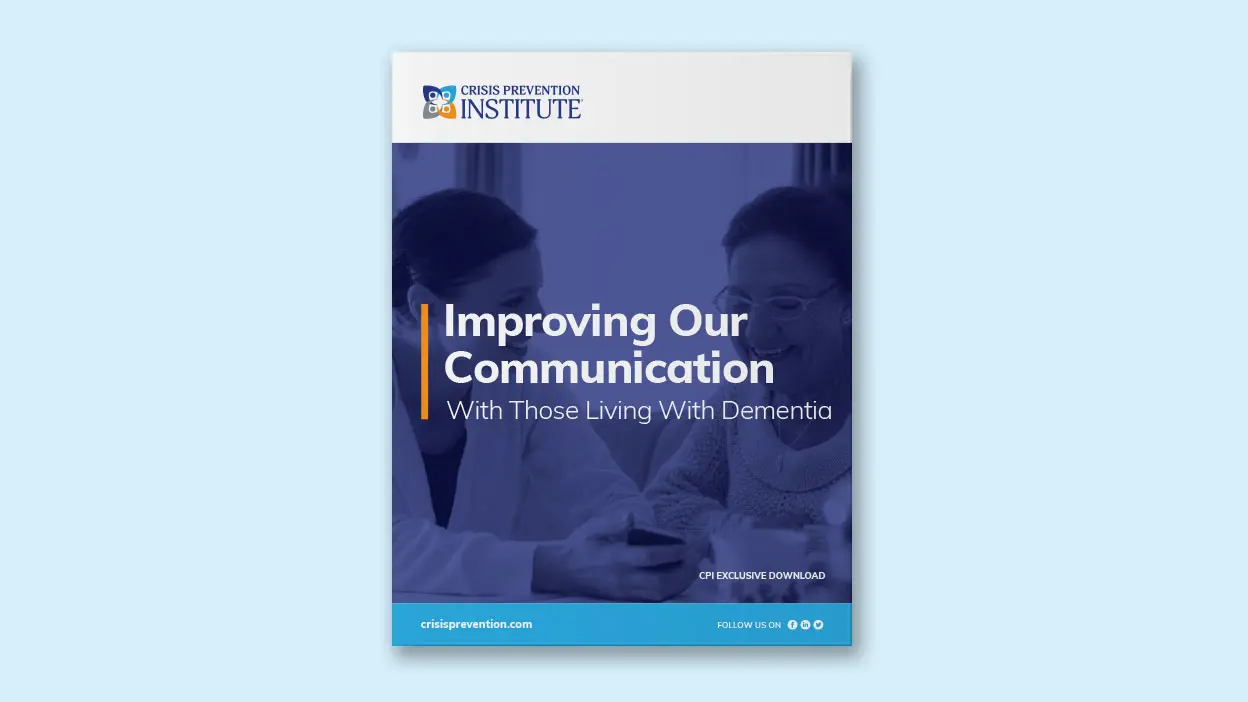
Improving Our Communication: With Those Living With Dementia
As facility and family caregivers, it’s important to understand the person living with dementia and not just their current stage of cognition. Our free resource provides some helpful strategies to increase your awareness and improve how you communicate with individuals experiencing cognitive challenges.
What Dementia Care De-escalation Covers
Dementia-specific de-escalation is the practice of reducing distress in a person living with cognitive change, before that distress escalates into resistance, aggression, or harm. It draws on verbal communication, environmental adjustment, and an understanding of the unmet need driving the behavior. Crisis Prevention Institute's Dementia Capable Care model teaches this approach across every cognitive stage.
Verbal de-escalation in dementia care prioritizes tone, pace, and simple language over reasoning. A resident in cognitive distress may not be able to follow logic or remember a recent agreement. Effective communication anchors the person in the moment in their emotional state to support them in a dignified way they can understand.
A person-centered approach treats distress behavior as communication. Rather than asking how to stop the behavior, staff are trained to ask what the person is trying to express, and to respond to the unmet need. This reduces reliance on physical intervention to improve quality of life.
Dementia Capable Care blends Claudia Allen's Cognitive Disabilities Model with Tom Kitwood's framework of person-centered care, layered with Crisis Prevention Institute's verbal de-escalation techniques. The 2nd Edition program is available in a blended format, equipping staff to support residents at every stage of care
Crisis Prevention Institute's Dementia Capable Care 2nd Edition certification course takes three hours of online learning followed by one day of live virtual training with a CPI instructor. Certification holds for two years before renewal. Once certified, staff are authorized to teach the program across their organization.
Crisis Prevention Institute Across Care Settings
Dementia care looks different in a memory care community than in a hospice or a multi-site senior living organization. Crisis Prevention Institute's training adapts to the specific risks, regulatory requirements, and family expectations of each setting.
Memory care
Person-centered training for staff supporting residents through every stage of cognitive change.
Skilled nursing and LTC
Training that aligns with CMS expectations for person-centered dementia care
Home health and hospice
Communication and de-escalation training for staff working in residents' own homes or end-of-life care.
Multi-site senior
Train-the-trainer programs that scale consistent dementia care training across every facility.
The Sustainable Impact of CPI Training
Our evidence-based crisis prevention programs have measurable impacts on the organizations we serve.
Frequently Asked Questions About CPI Training for Dementia Care Providers
De-escalation training equips staff with evidence-based skills and strategies to safely manage disruptive behaviors and crisis situations before they escalate to violence. This type of workplace violence prevention training focuses on verbal techniques, communication frameworks, and intervention methods that help create safer environments for both staff and those they serve.
CPI's de-escalation training is customized for your workplace's unique roles and risk levels. Whether your organization follows a hands-off policy or requires physical interventions, the training ensures staff learn the specific skills necessary for their roles and the risks they may encounter.
The training encompasses several key components, including common de-escalation communication frameworks, proactive verbal de-escalation strategies, and safety intervention and disengagement skills. Programs range from Verbal Intervention™ training for departments with hands-off policies, to Nonviolent Crisis Intervention® training that provides skills to safely respond to everyday crises, to advanced programs for facilities supporting individuals who display dangerous or complex behaviors.
To foster a system-wide culture of safety, all staff should receive de-escalation training appropriate to their specific roles and responsibilities.
Yes, CPI offers comprehensive training programs specifically designed for dementia care providers. As the provider-of-choice for person-centered dementia care, CPI delivers evidence-based training that empowers caregivers with the tools needed to optimize quality of life for individuals living at all stages of dementia.
CPI's dementia training programs focus on the Care, Welfare, Safety, and Security℠ of individuals living with dementia and their care staff. The training teaches empathetic approaches to behavior management that prioritize quality of life while providing safe de-escalation techniques to minimize distress behavior.
Available Programs Include:
Dementia Capable Care - An evidence-based program that teaches staff to safely de-escalate distressing situations and reduce pharmacological interventions with a person-centered approach.
Verbal Intervention™ - Ideal for dementia care roles requiring a hands-off approach, focusing on verbal de-escalation strategies informed by understanding the reasons behind distressing behavior.
Nonviolent Crisis Intervention® - Teaches staff caring for dementia patients how to de-escalate crisis situations using both restrictive and nonrestrictive techniques.
Training Benefits:
- Improves quality of life for patients through personalized care that preserves dignity and independence
- Fosters empathy and understanding through person-centered frameworks that build trust
- Reduces caregiver stress and burnout while increasing job satisfaction
CPI also offers Certified Instructor programs through a train-the-trainer method, allowing organizations to develop internal capacity for ongoing dementia care training. Additionally, CPI Dementia Care Specialists provides Continuing Education opportunities for several programs.