11 Proven Behavior Support Strategies for Paraprofessionals in Today’s Classrooms
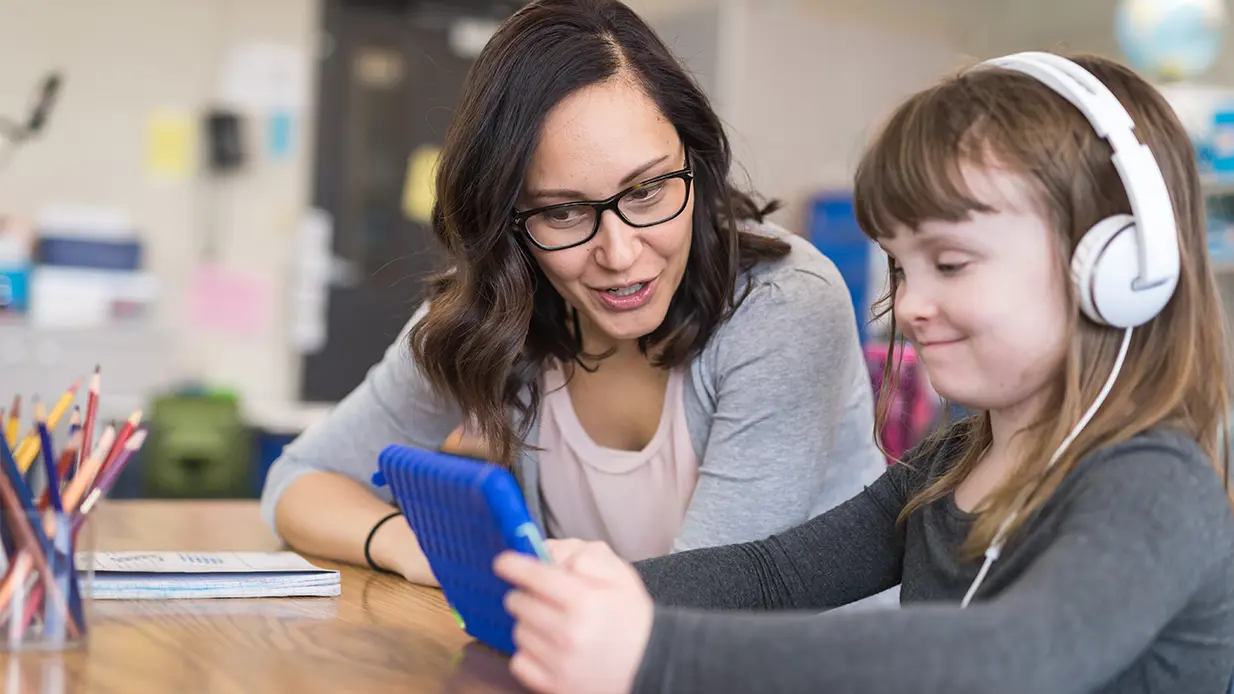
The role of a paraprofessional or educational assistant (EA) has never been more vital—or more complex.
Today’s classrooms are shaped by post-pandemic trauma, increased behavioral needs, and a growing emphasis on social-emotional learning. That’s why behavior support strategies must go beyond compliance and focus on connection.
Here are 11 proven behavior support strategies to use in the classroom this school year to improve student-teacher relationships and empower felt safety.
1. Active Listening
It’s important to take into account what students are saying verbally and paraverbally. Listen for feelings, not just facts.
To engage in active listening, it’s key to acknowledge that each person has their own truth. When you acknowledge that the other person has experiences that are different than yours, it’s easier to find common ground to move forward in behavioral change.
Consider engaging in a Genuine Encounter Moment. You can do this by:
- Giving the student total and complete focus
- Giving eye contact and having a friendly and open expression on your face
- Listening closely
- Withholding judgment
The reality is, children are regularly exposed to negative comments. The more you can genuinely engage with your students in an authentic way, the more they feel respected and valued. And this authentic engagement will positively impact their behavior.
2. Set Clear Limits
Predictable limits help children make sense of their world, help them feel secure, and provide them with guidance.
There are four things to consider when setting limits:
- Avoid using fear, intimidation, obligation, and guilt.
- Clearly state the specific boundary with a corresponding consequence.
- The corresponding consequence should be a logical or natural consequence that results from not following the limit, and it should be enforceable.
- Use strategies to prevent power struggles and maintain connection.
3. Rationally Approach Power Struggles
A power struggle occurs when two people hold different ideas and both are unwilling to compromise. Once you recognize a power struggle beginning, your priority should be to de-escalate quickly to steer clear of further conflict.
- Step back, don’t engage: A power struggle needs two participants. Know when to disengage and avoid taking things personally—whether verbal or nonverbal.
- Reframe the moment: Instead of seeing tension as negative, treat it as a chance to respond thoughtfully and build trust, rather than reacting with defensiveness or unprofessional cues.
- Use calming phrases: Short acknowledgments like “I hear you,” “Good point,” or “Noted” can defuse tension and show you’re listening—while keeping your tone steady and respectful.
4. Meet Their Physical and Emotional Needs
It’s important to teach students to become self-aware and to engage in self-care. When your students’ physical needs are not being met, they have the potential to escalate into aggressive or acting-out behaviors. A handy way to teach children to remember their physical needs is to use the acronym HALT.
- H – Hungry. Hunger can be a physical or an emotional need. If the hunger is physical, offer nutritious snacks. If the hunger is emotional, help them name the emotional need they’re feeling.
- A – Angry. Anger is a normal, healthy emotion. Anger becomes destructive when people express it inappropriately. It’s important to name the emotion and to explore what’s causing it. Offer solutions like mediating if the student is angry at another person. Physical activity also helps with feelings of anger. Go for a walk. Go to the gym. Do some push-ups.
- L – Lonely. Loneliness can occur both in a crowd and by oneself. Students experiencing challenges with emotional regulation withdraw into themselves for a variety of reasons. If you notice your student is withdrawn, engage them in conversation. Reach out and engage in active listening. Help the student connect with a peer.
- T – Tired. When we’re tired, we find it difficult to cope. Problems seem bigger; the world seems more hostile when we’re tired. If your student feels tired, encourage them to rest or take a short nap. If that’s not possible, go for a walk around the block or encourage them to take a couple of deep breaths.
HALT Classroom Poster
Help students identify their emotional and physical needs with this free printable classroom poster.
Download5. Daily Physical Activity
Exercise is an important tool to help students manage both their physical and mental health as it releases feel-good endorphins. Exercise also promotes neural growth and releases tension, allowing students to focus on physical activity and interrupt negative thinking. As an added benefit, it improves memory, enhances self-esteem, and improves sleep.
Be a role model for positive behavioral change by participating in physical activity with your students. Take your students for a walk through the halls—even jogging on the spot and doing push-ups and jumping jacks can boost endorphins and reduce tension.
6. Mindfulness and Breathing Exercises
Mindful breathing is the process of focusing your attention on your breath moving in and out of your body. The results of mindfulness are stress relief, decreased blood pressure, and improved sleep. It has been used to help in the treatment of depression, eating disorders, anxiety, and substance abuse.
While there are many different breathing exercises out there, balloon breathing is a good classroom-friendly option:
- Inhale fully. Place your hands on your belly and breathe in slowly through your nose.
- Feel your belly fill up as if it’s filled with a giant balloon.
- Exhale fully. Open your mouth and blow all of the air out of your body.
- Let your belly get flat like an empty balloon.
- Repeat five times.
7. Use Positive Reinforcement
Sometimes negative behavior is the only way that students can communicate their needs to you. It may be the only way they know how to get your attention. Instead of reinforcing the negative behavior, try to catch them being good. The goal here is to praise the positive behaviors and neutralize or ignore the negative behaviors.
Steps for catching a student being good:
- Identify the negative or disruptive behavior (one or two behaviors).
- Identify the times when the negative or disruptive behavior occurs in the classroom.
- Identify fixed time intervals through the course of the day in which you will assess to see if your student is engaging in negative behavior.
- If, at those fixed intervals, the student is not engaged in the negative behavior, praise them or reward them.
- If, at those fixed intervals, the student is engaged in the negative behaviors, ignore the behavior (if at all possible).
- Direct your attention to those students who are acting appropriately and give them praise/rewards.
8. Model Prosocial Skills
Prosocial skills are those behaviors that we engage in that benefit others. These behaviors include cooperation, sharing work, sharing toys, and emotionally supporting others who are in distress.
Students who have behavior disorders often have not developed strong prosocial skills. You can support prosocial skill development by:
- Being a positive role model. The more that students see positive adult interactions, the more likely they are to engage in such activities themselves.
- It's important to talk through common social situations and provide feedback about appropriate social interactions.
- Role-playing. Have students act out social situations and appropriate responses.
- Encouraging structured social play between peers. Play is one of the best ways to encourage sharing, cooperation, and teamwork.
9. Offer Choices, Not Orders
Offering students choices instead of giving an order encourages connection and cooperation. Choices communicate that their EA/paraprofessional respects them and their opinions. It provides an opportunity for students to build responsibility and be empowered.
Use these guidelines when offering choice to your student:
- Provide two positive options
- Be clear and specific
- Make sure that both choices are acceptable and feasible
When your students are comfortable making choices, modify this choice by using the “First/Then.”
You can use First/Then in this way:
- Present the student with a work task that needs to be accomplished.
- Give the student a choice of two options that they would like to engage in after the work task is completed. It could include:
- Computer time
- Time in the playground
- Coloring/drawing
- When the student has completed the work task, allow them to engage in the second “reward” task.
Using First/Then promotes delayed gratification. It enforces the idea that first work has to occur before they are rewarded with a choice task.
10. Regulate Your Own Emotions
We often overlook how we can affect the emotional state of our students. Emotions can be infectious. When we are angry, aggravated, excited, anxious, or nervous, these emotional states can impact the state of escalation of our students.
If you notice that your student is escalating and becoming visibly agitated, try these techniques to control your own emotions:
- Lower the volume of your voice and speak more quietly. As you speak more quietly, your student will have to become quieter to hear you.
- Alter the cadence of your voice and speak more slowly.
- Modulate your tone of voice and be calm and supportive.
- Simplify your vocabulary.
Remember that as your student starts to escalate, they’re starting to lose rationality. Speaking loudly and quickly will increase their agitation.
11. Understand the Neuroscience of Behavior
When students feel unsafe—whether physically or emotionally—their amygdala activates a fight, flight, or freeze response. This stress response can manifest as defiance, withdrawal, or aggression—not because the student is choosing to misbehave, but because their brain is doing its best to protect them.
When educators see behavior through the lens of neuroscience, they better understand how stress affects the brain and body, allowing them to implement more supportive and inclusive classroom strategies.
CPI’s Reframing Behavior™ program teaches educators how to recognize the signs of stress and dysregulation, and use proactive strategies to co-regulate with students to guide them back to a place of calm and connection.
Supporting Student-Teacher Relationships in the Classroom
When de-escalating tension in the classroom, remember that behavior influences behavior. How you react and present your emotions will impact how your students do as well.
The next time you encounter a situation, take a deep breath and calm yourself. Don’t react to the situation. Use the strategies described above to respond to the situation.
Free Resource: HALT Classroom Poster
This printable poster offers a handy way to teach children to remember their physical needs by using the acronym HALT. Download your free classroom poster today.
Download Now