5 Keys to Safer Schools: Building Calm, Confident Learning Environments

With rising behavioral challenges, shrinking school budgets, and widespread staff burnout, teachers and administrators face immense pressure. When daily disruptions take over, teaching takes a back seat, and both staff and students feel the strain.
However, when everyone from the superintendent to the support staff shares the same strategies, schools can proactively manage behavior before it escalates.
We put together the key benefits of utilizing de-escalation training to promote safer learning environments and empower educators.
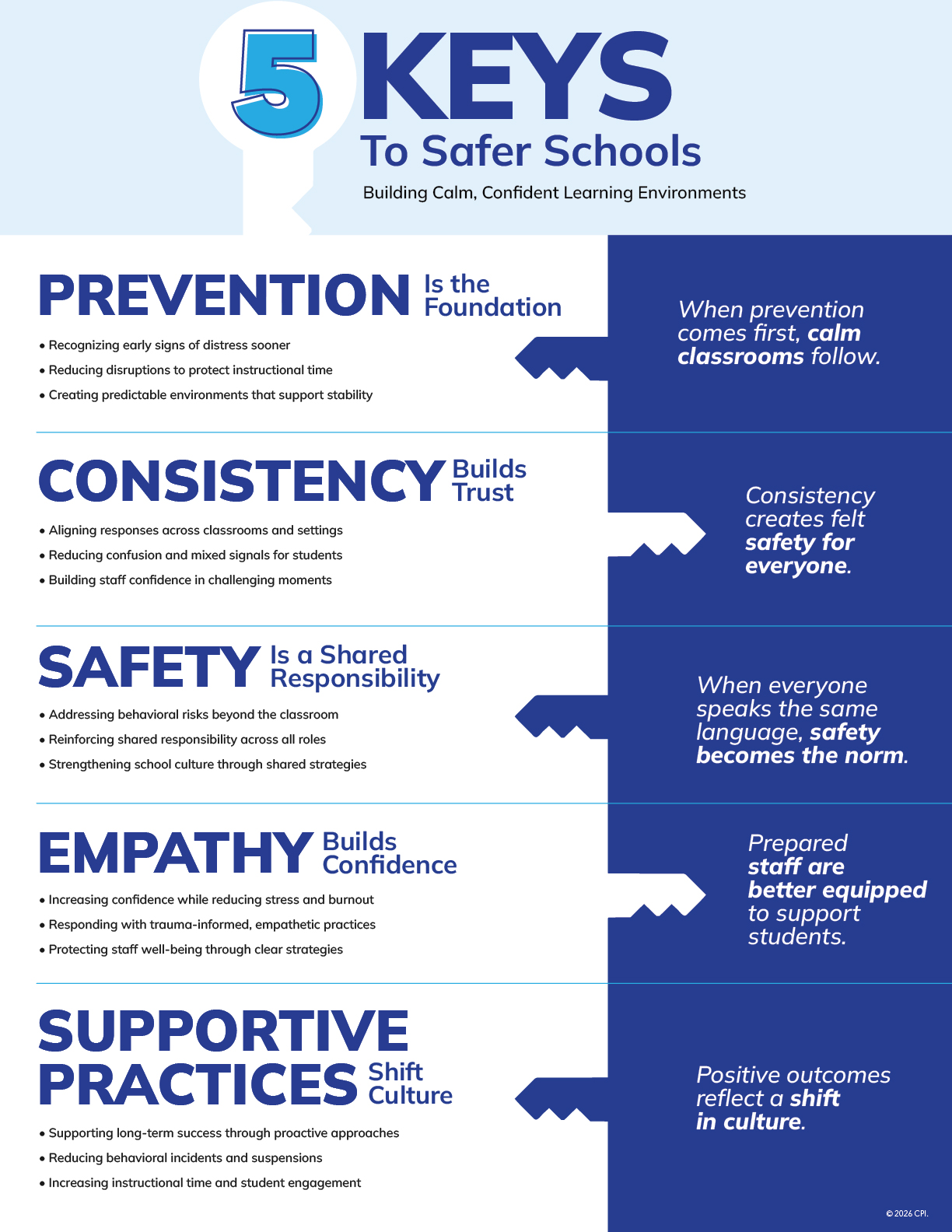
Key One: A Foundation of Proactive Safety
Every week, educators lose valuable instructional time managing disruptive behaviors. When staff are equipped to prevent incidents before they escalate, that time can be reclaimed, benefiting both learning outcomes and classroom stability.
How educators respond in moments of distress matters. But the most effective response happens earlier, before behavior escalates. CPI training helps staff recognize early warning signs of distress and understand the underlying factors influencing student behavior. With this insight, educators can intervene sooner, reducing disruption and supporting more positive outcomes.
Key Two: Consistent Responses Across All Staff
Imagine a student who struggles with emotional regulation. In one classroom, the teacher responds to an outburst with a calm, supportive de-escalation technique. Later that day in the cafeteria, a different staff member reacts with immediate punitive measures. This inconsistency creates confusion and can also trigger further escalation.
A consistent approach ensures that students know what to expect and allows educators to navigate challenging behavior with confidence and clarity.
When schools prioritize professional development and ensure all staff are trained in the same evidence-based techniques, they can create a cohesive and supportive environment that addresses behavior challenges effectively while meeting diverse student needs.
Key Three: Strengthened Safety Across the Entire School
Behavioral incidents aren’t limited to the classroom. Hallways, buses, playgrounds, and cafeterias all present moments where escalation can occur, making schoolwide alignment essential.
Everyone plays a role in maintaining a positive school climate. By providing tailored training for all tiers of support, schools ensure that everyone, from the lunch monitor and the principal, share the same de-escalation skills.
When the entire school speaks the same language regarding behavior, a culture of calm, consistency, and confidence can grow.
Key Four: Empowered Educators and Support Staff
Constant behavioral challenges take a toll on staff, contributing to stress and burnout over time. Educators need practical tools to help them better support diverse student needs without compromising their own well-being.
When educators feel confident in how to respond to complex situations, they're better equipped to de-escalate challenging behavior. And when they understand the trauma or anxiety behind the behavior, they can respond more effectively and empathetically to distress.
Key Five: Measurable, Long‑Term Impact
When leaders evaluate professional development investments, results matter. Proactive safety strategies support the outcomes districts are working toward, such as safer learning environments, stronger staff support, and sustained student engagement.
CPI's evidence-based approach offers a measurable, long-term impact that helps maximize your budget. Schools that implement de-escalation training see a reduction in behavioral incidents and out-of-school suspensions. With fewer disruptions, instructional time increases, and student engagement improves.
Support Schoolwide Felt Safety
Download your free Help Them Feel Safe poster. This printable guide offers practical strategies to help you build felt safety and stronger relationships throughout your school.
Download NowBuilding Safer Schools Starts with the Right Foundation
Building a culture of felt safety requires a coordinated approach that supports prevention, consistency, and long-term change. By empowering education staff with the right skills and support systems, you can create a sustainable, positive environment across your school.
Learn how CPI training can make a positive impact on your school culture.